

What Information Is Needed to Design a Tensile Membrane Structure?
Whether you’re planning a shade structure for a school, sports facility, public space, commercial development, or vehicle storage area, the quality of the early site information can have a significant impact on design outcomes, approvals, construction costs, and project timelines.
The visible structure above ground is only part of the engineering challenge. The design team also needs to understand what exists below ground, around the site, and beneath the foundations before informed engineering decisions can be made.
The information outlined below is generally obtained through surveys and investigations undertaken by qualified surveying and geotechnical professionals. In many cases, however, some of this information may already be available from previous development work, civil infrastructure projects, geotechnical investigations, or building upgrades completed at the site.
This article explains the key information typically required during the planning and preliminary design stages of a tensile membrane structure project.
Why Early Site Information Matters
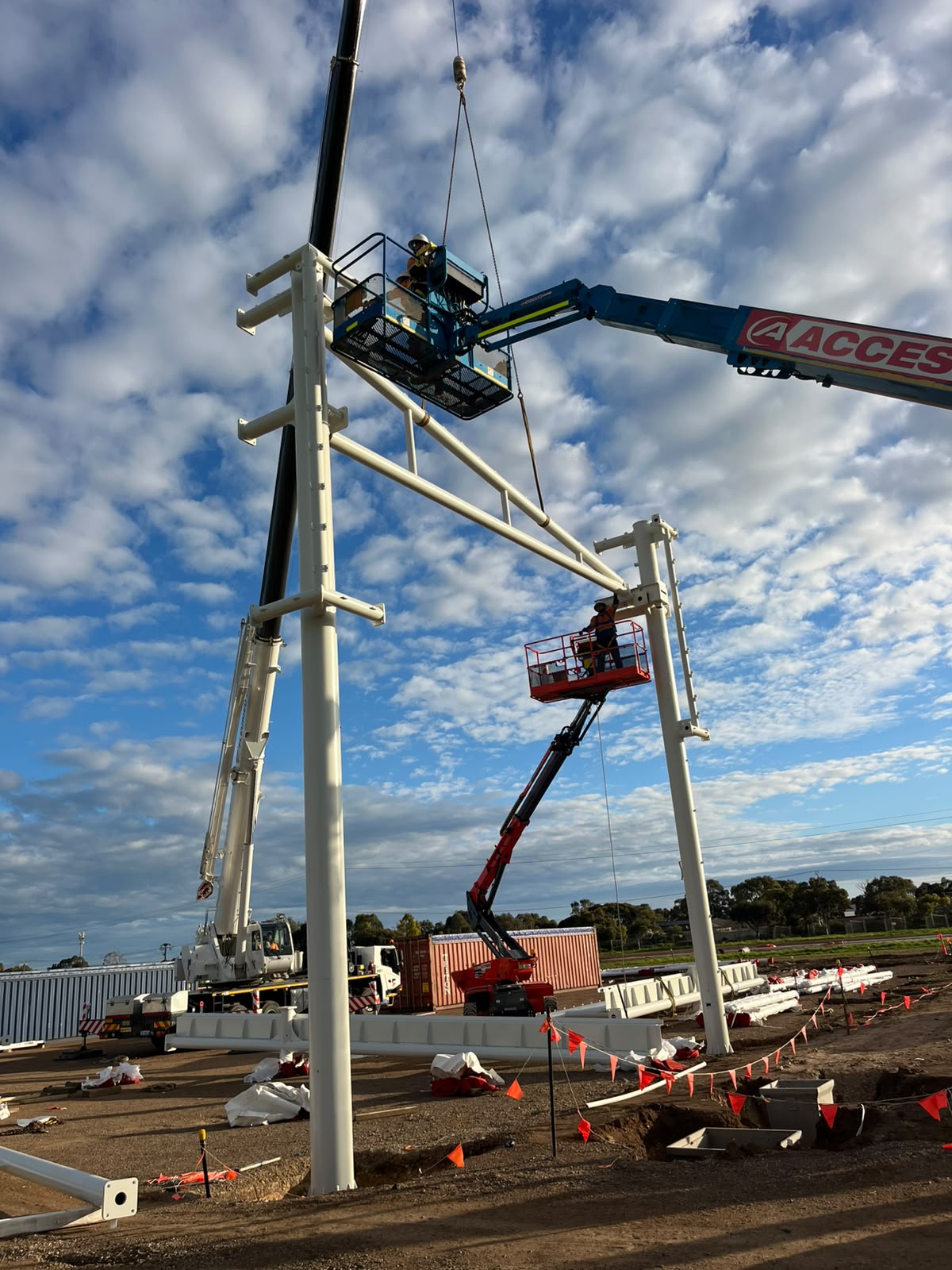 Tensile membrane structures are highly efficient engineered systems. Because they span large areas with relatively lightweight materials, every component works together to manage wind loads, structural forces, drainage, movement, and long-term performance.
Accurate site information allows the design team to:
- Determine suitable structural forms and column locations
- Assess foundation options and likely construction costs
- Identify constraints that may affect design or approvals
- Reduce the risk of redesign during later project stages
- Improve pricing accuracy and programme certainty
- Coordinate efficiently with architects, civil engineers, landscape consultants and contractors
The more accurately existing site conditions are understood, the more confidently design decisions can be made.
Services Location Survey
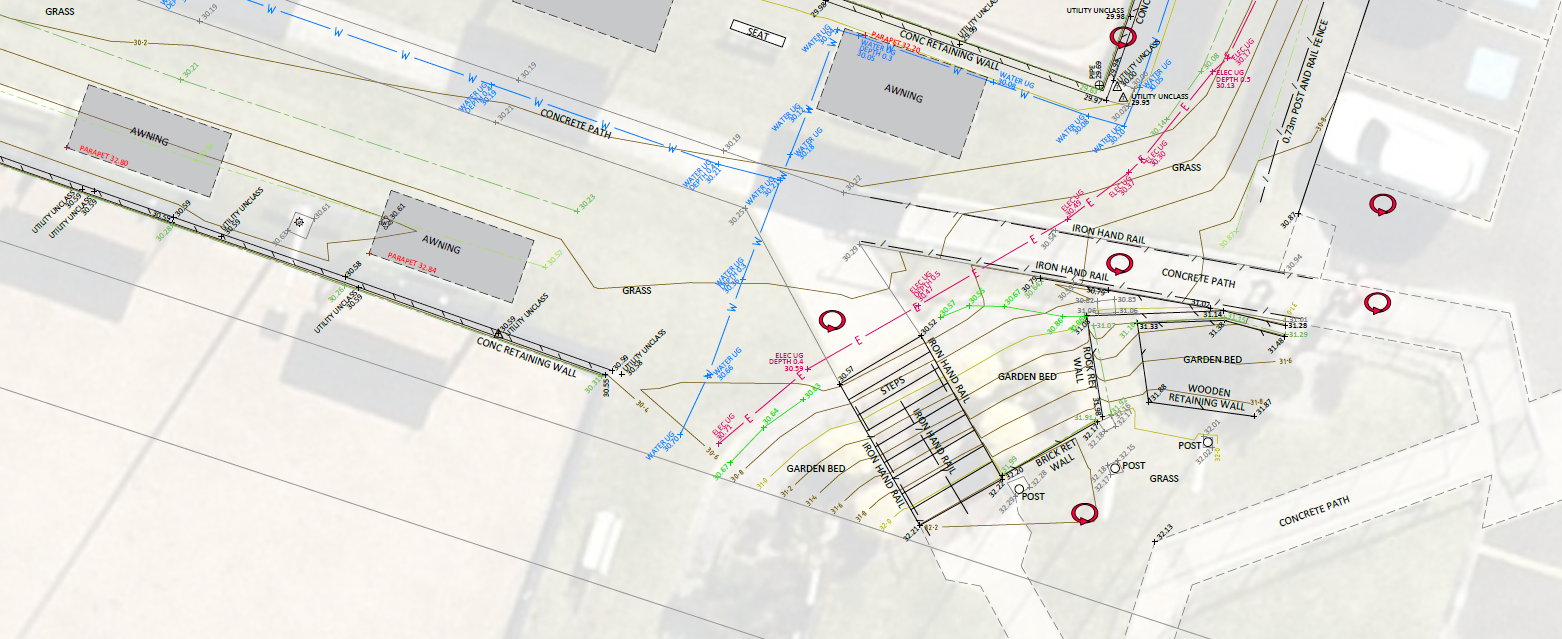
One of the most important early investigations is understanding what underground services already exist within the proposed construction area.
Underground infrastructure can significantly influence where columns and foundations can be located. Discovering buried services late in a project can lead to costly redesigns and delays.
A Services Location Survey identifies both the horizontal position and depth of underground infrastructure and utilities surrounding the proposed structure.
Typically, this survey records:
- Electrical services
- Communications and data infrastructure
- Water mains and services
- Stormwater drainage
- Sewerage infrastructure
- Gas services
- Irrigation systems
- Signal and control systems
- Pits, inspection openings and manholes
This work should be undertaken by appropriately qualified service location specialists.
Why It Matters
The structural engineer needs sufficient clearance around foundations and footings to avoid damaging existing infrastructure and to confirm that construction can proceed safely and economically.
Features And Levels Survey
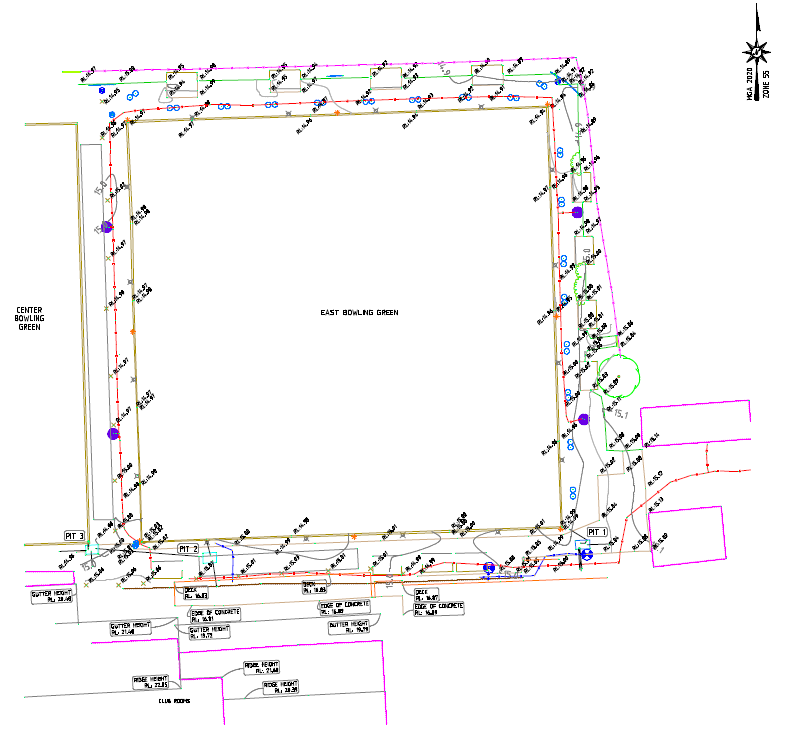
A Features and Levels Survey provides a detailed representation of the site’s physical characteristics and existing conditions.
This survey is often one of the most valuable documents during the concept and design stages because it allows designers to understand how a new structure will sit within the surrounding environment.
Typical information captured includes:
 Existing Ground Conditions
- Surface levels
- Contours
- Site grades and falls
- Existing drainage conditions
Buildings and Structures
- Existing buildings
- Adjacent structures
- Gutters, downpipes and awnings
- Retaining walls
- Fences
- Stairs and ramps
Site Infrastructure
- Concrete slabs and paving
- Pathways and footpaths
- Sports equipment
- Seating and furniture
- Lighting poles
- Flag poles
Landscaping and Environmental Features
- Trees
- Significant vegetation
- Garden beds
- Existing open space elements
Boundaries and Adjacent Properties
- Property boundaries
- Setbacks
- Neighbouring buildings
- Overlooking windows
- Areas potentially impacted by the new structure
Photographs corresponding with major site features are also extremely valuable and can often assist with concept design before detailed site inspections occur.
Why It Matters
Tensile structures are often designed to complement existing facilities rather than replace them. Understanding existing levels, clearances and constraints helps ensure the structure integrates successfully with its surroundings.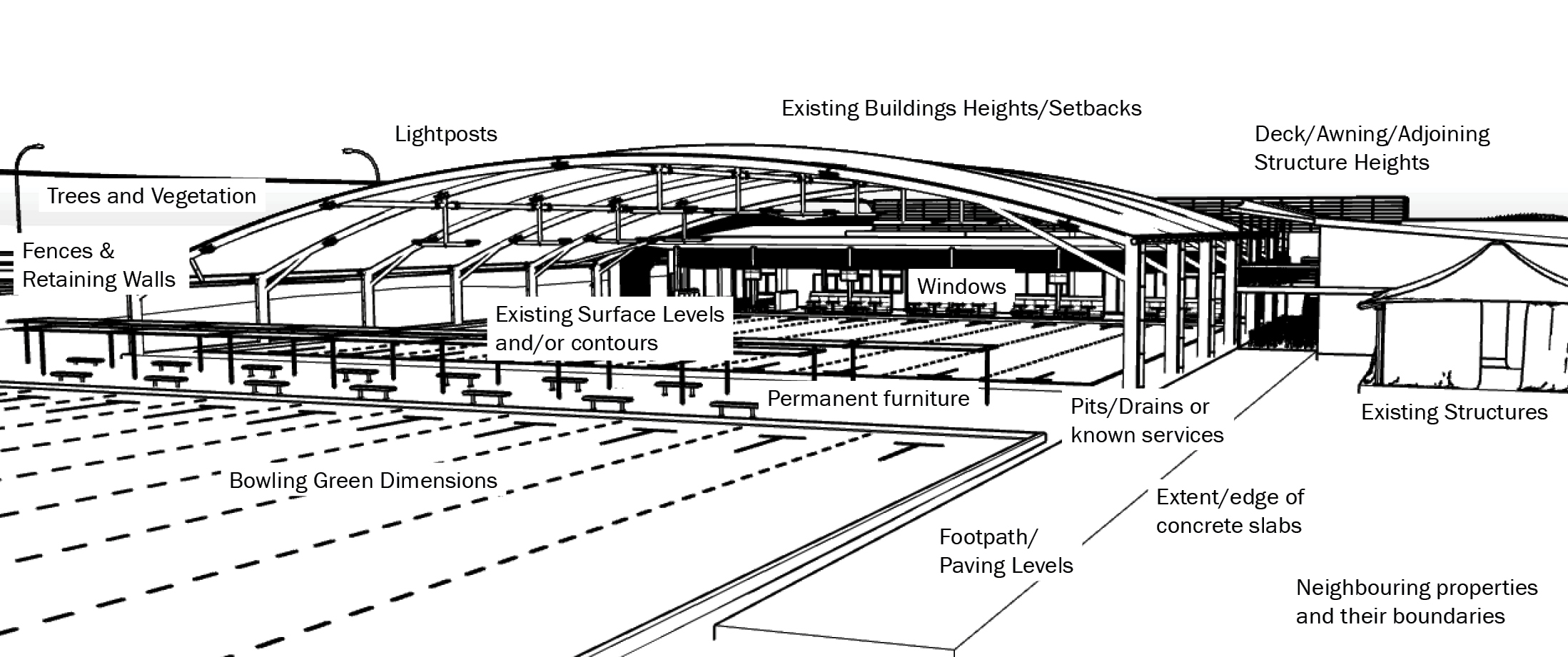
Geotechnical Investigation (Soils Report)
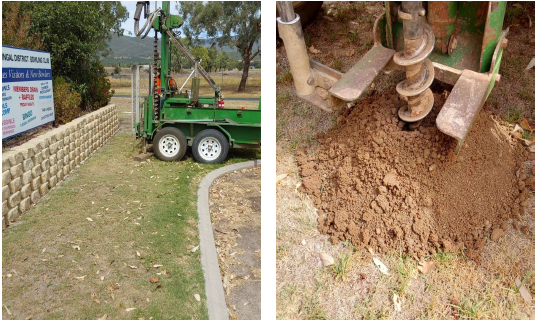 While not always essential during the earliest planning stages, a Geotechnical Report is one of the most valuable documents for improving cost certainty and reducing construction risk.
The report assesses the physical properties of the soil and ground conditions beneath the proposed structure.
If no recent geotechnical information exists for the site, obtaining a report early in the planning process is often a worthwhile investment.
A soils investigation can provide information about:
- Soil classification: Identifying the type of soil present (e.g., clay, sand, silt, rock).
- Bearing capacity: Determining the maximum weight the soil can safely support.
- Soil reactivity: Assessing the potential for the soil to expand or contract due to moisture changes.
- Soil contamination: Ensures compliance with National Environment and Protection Measure (NEPM). Generally done in conjunction with geotechnical drilling.
- Groundwater levels: Identifying the depth and variability of groundwater.
- Potential risks: Identifying hazards like erosion, landslides, or subsidence.
- Recommendations: Suggesting appropriate foundation types, drainage systems, and construction techniques.
Just as importantly, the report will usually provide recommendations for suitable foundation systems.
How Ground Conditions Influence Foundation Design
The foundations supporting a tensile membrane structure must resist significant uplift, compression and lateral forces generated by wind. Ground conditions play a critical role in determining the most suitable foundation solution, with different soil types often favouring different construction methods.
Bored Piers :
Bored piers are commonly used in clay soils and dense sands where groundwater conditions are manageable. They provide a robust and economical solution for resisting the tensile and lateral loads generated by fabric structures and are often the preferred option on sites with favourable subsurface conditions.
Screw Piles
Screw piles are often considered where deeper founding depths are required, construction access is limited, or project programmes demand rapid installation. Their suitability depends heavily on the strength and consistency of the underlying soil profile, and they can offer significant advantages in certain ground conditions.
Pad Footings
Pad footings are generally less common for tensile membrane structures due to the substantial uplift forces that foundations must resist. They are most often considered where suitable bearing strata or rock is encountered near the surface, making shallow foundation solutions practical and economically viable.
Information Engineers Look For in a Geotechnical Report
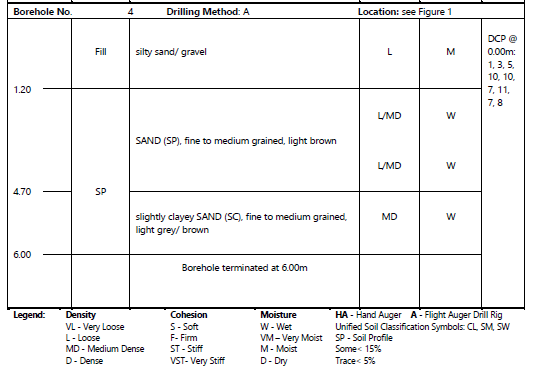
Depending on site conditions and foundation type, engineers may review information such as:
- Soil profiles and strata descriptions
- Bearing capacities
- Skin friction values
- Soil density
- Shear strength parameters
- Friction angles
- Horizontal subgrade modulus values
- Groundwater levels
- Predicted settlement performance
For most tensile membrane structures, geotechnical investigations are commonly undertaken to depths of approximately six metres or deeper where site conditions warrant further investigation.
Existing Information May Already Be Available
In many cases, schools, councils, sporting organisations, commercial property owners and developers already possess some of this information from previous projects.
Examples include:
- Civil infrastructure works
- Building extensions
- Sporting facility upgrades
- Landscape redevelopment projects
- Previous geotechnical investigations
Providing this information early can significantly reduce preliminary investigation requirements and accelerate concept development.
The Better the Information, the Better the Outcome
Every successful tensile membrane structure begins with a thorough understanding of the site.
Services location surveys, features and levels surveys, and geotechnical investigations each contribute critical information that allows designers, engineers and builders to make informed decisions from the outset.
Whether these investigations are commissioned directly by the client, arranged through the project consultant team, or coordinated by MakMax, obtaining accurate site information early helps reduce risk, improve budget certainty, and create better project outcomes.