

A Practical Guide to Padel Court Roofing and Canopies
Padel is one of the fastest-growing sports in the world, and its popularity is rapidly increasing throughout Australia. As more padel clubs and sporting facilities are developed, many operators are asking the same question:
Should we cover our padel courts?
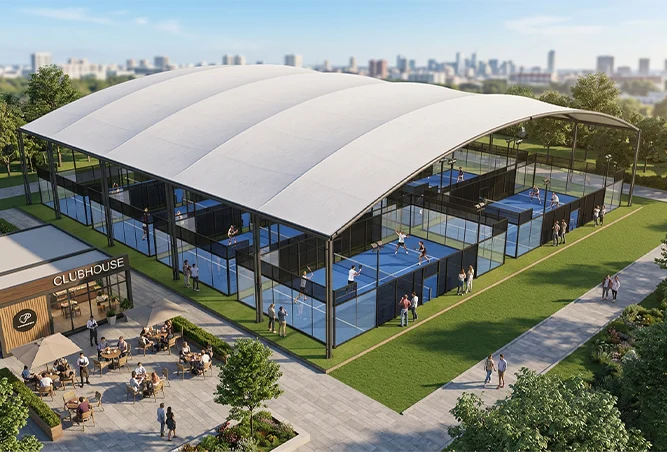
While covered padel courts are still relatively uncommon in Australia, they offer significant benefits for player comfort, weather protection, year-round usability, and facility revenue. For clubs planning a new venue or upgrading an existing facility, investing in a purpose-designed roof structure can dramatically improve the long-term success of the venue.
As Australia’s leading tensile membrane structure specialist, MakMax has been involved in the design and delivery of sports roofing projects across the country. Our experience spans tennis centres, basketball courts, multi-sport facilities and stadium structures. More recently, MakMax was invited to contribute to the Sports and Play Industry Association (SAPIA) Code of Practice for Padel Courts, helping establish guidance around sports court roofing and Australian building requirements.
This article provides a straightforward overview of the key considerations when planning a covered padel or pickleball facility.
 Contents
- Why Cover Your Padel Courts?
- What Is The Best Type of Padel Court Roof Structure?
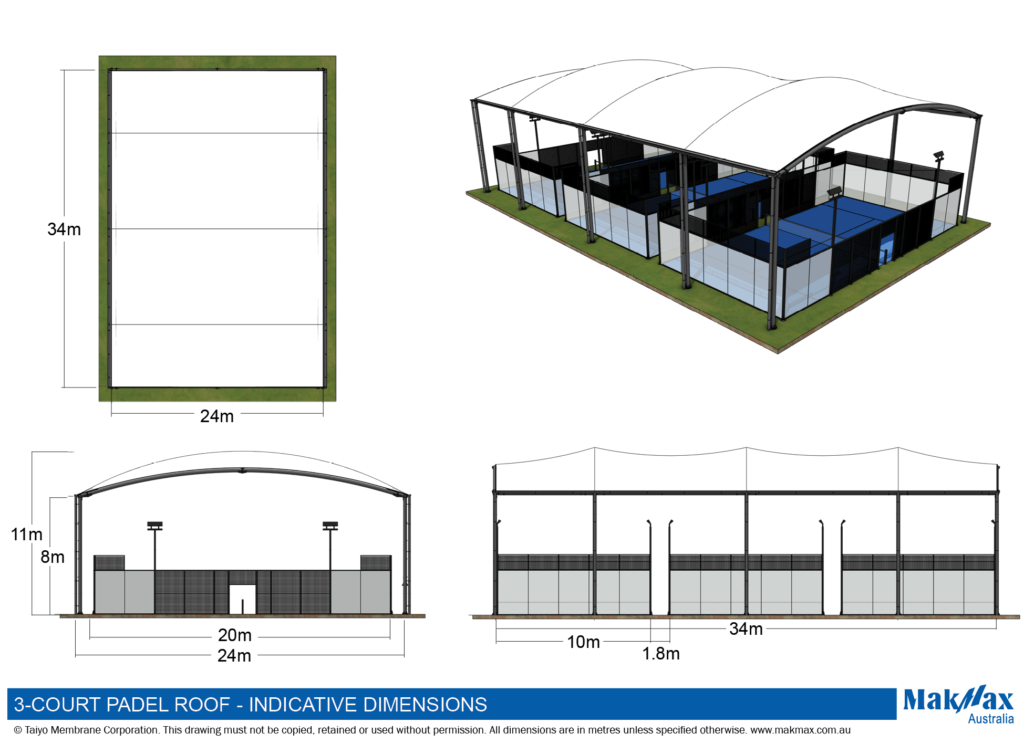
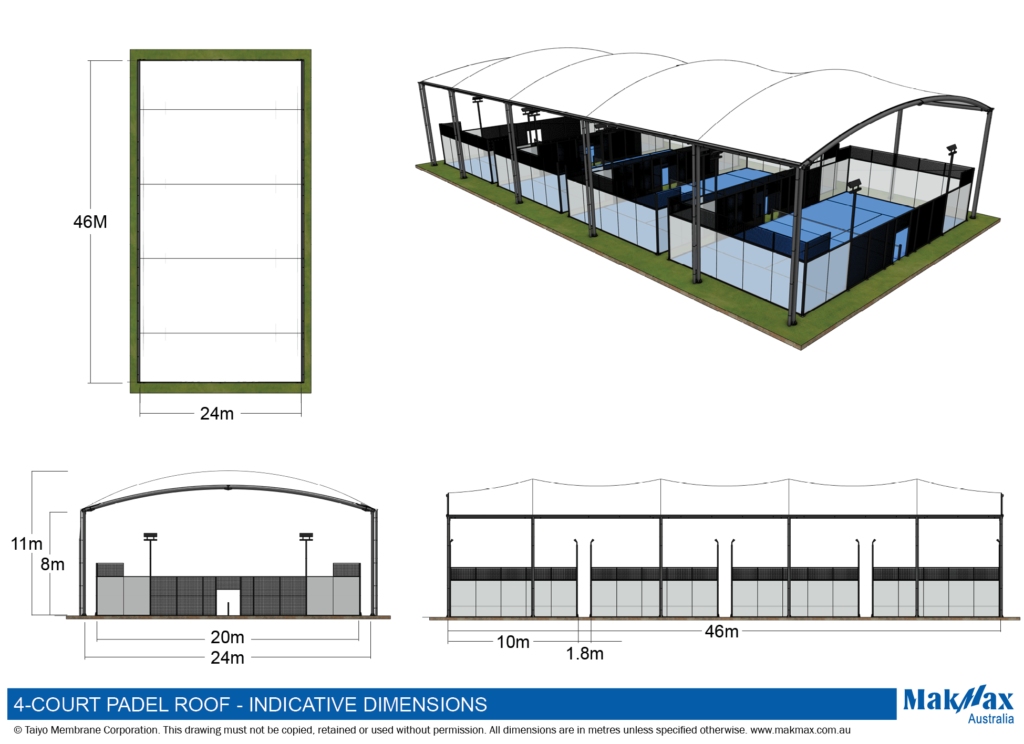
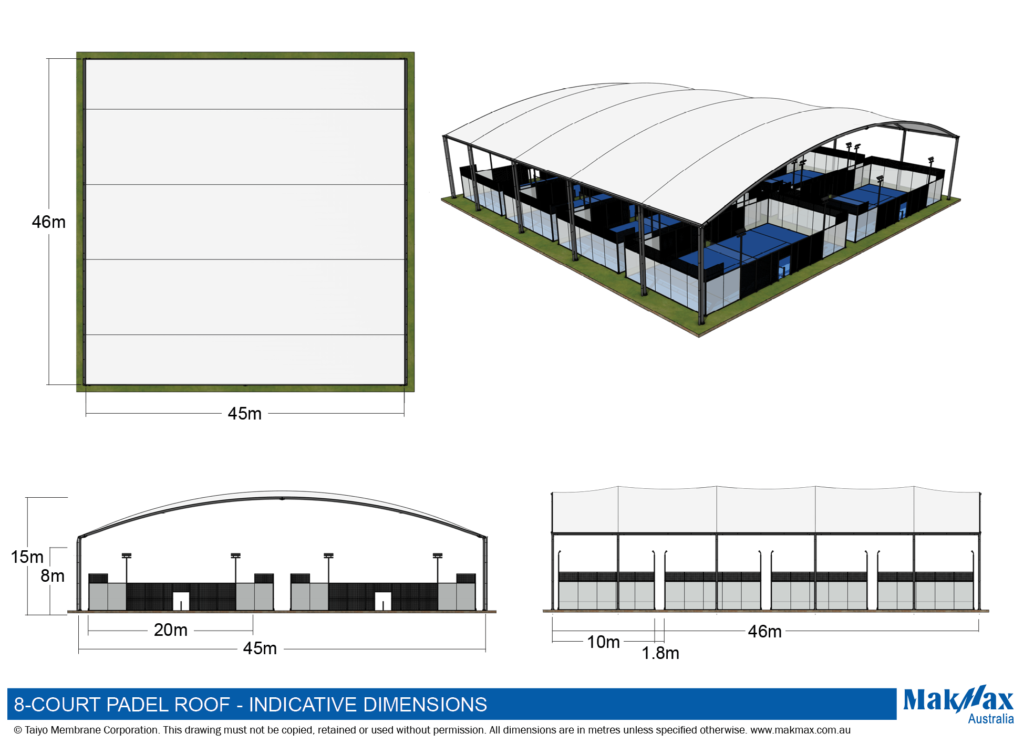
- How High Should a Covered Padel Court Be?
- Key Design Considerations for Padel Court Canopies
- Advantages of Tensile Membrane Roofing For Padel Courts
- How Long Does a Padel Court Canopy Last?
- Covered Padel Courts at Scale: Fully Enclosed Facilities
- Are you Planning A Covered Padel Court Project?
Why Cover Your Padel Courts?
The Australian climate presents challenges for outdoor sport.
Intense UV exposure, rain interruptions, heat stress and seasonal weather events can all impact the usability of court facilities. A roof structure provides protection from the elements while maintaining an outdoor playing experience.
Benefits of a covered padel courts include:
- Increased court availability throughout the year
- Reduced weather-related cancellations
- Improved player comfort and spectator experience
- Protection of court surfaces and infrastructure
- Greater revenue potential through increased utilisation
- Enhanced appeal for coaching programs, tournaments and events
For many operators, the ability to maximise court bookings throughout the year becomes the key driver behind investing in a roof structure.
What’s The Best Type of Padel Court Roof Structure?
There are several options available when covering a padel facility, but a tensile membrane structure remain one of the most practical solutions for Australian sports facilities.
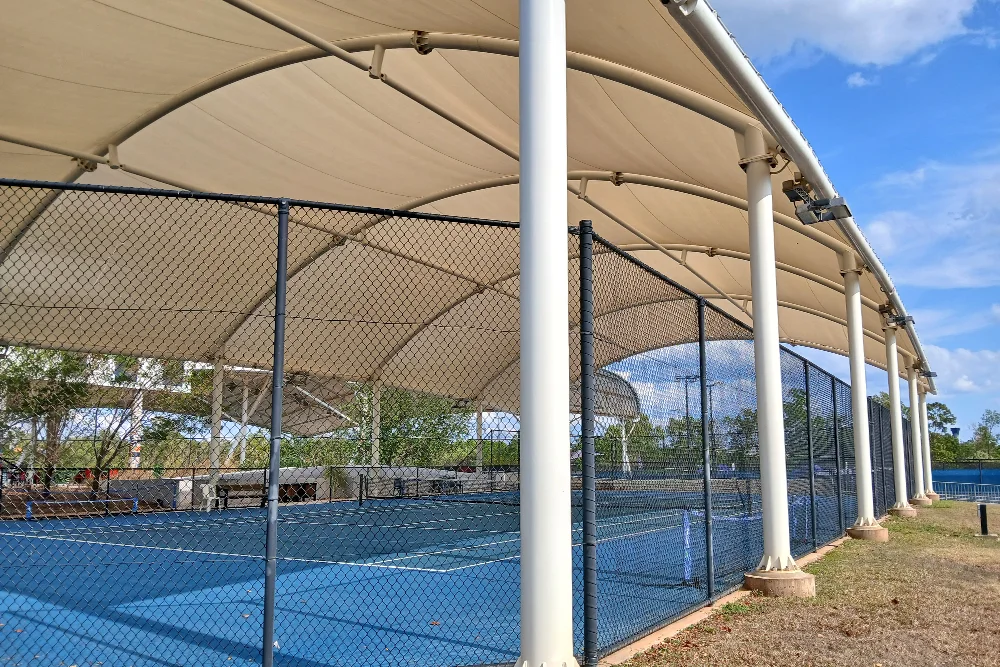
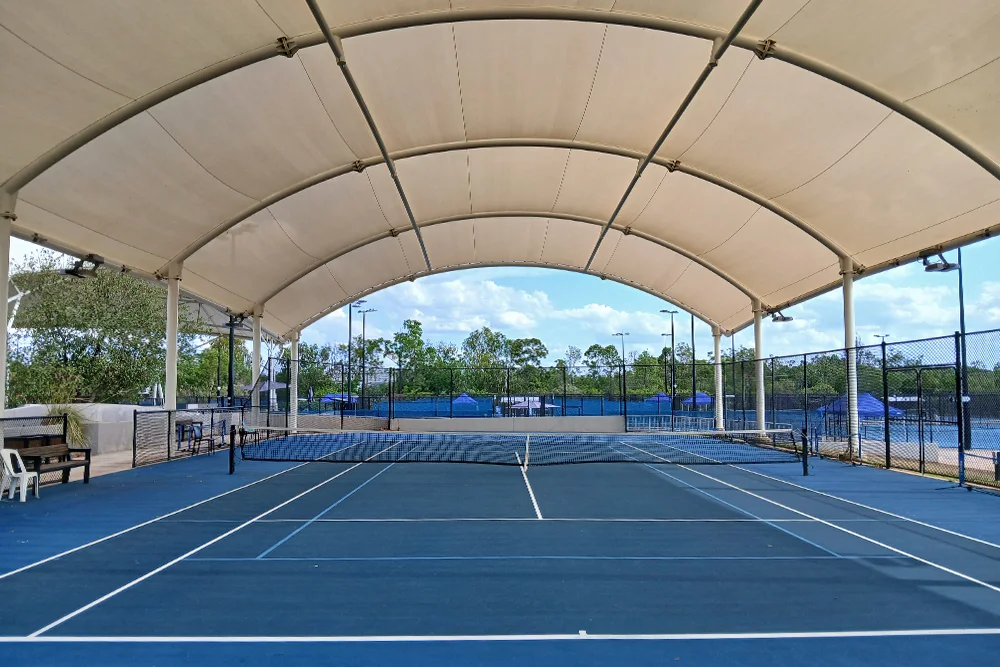
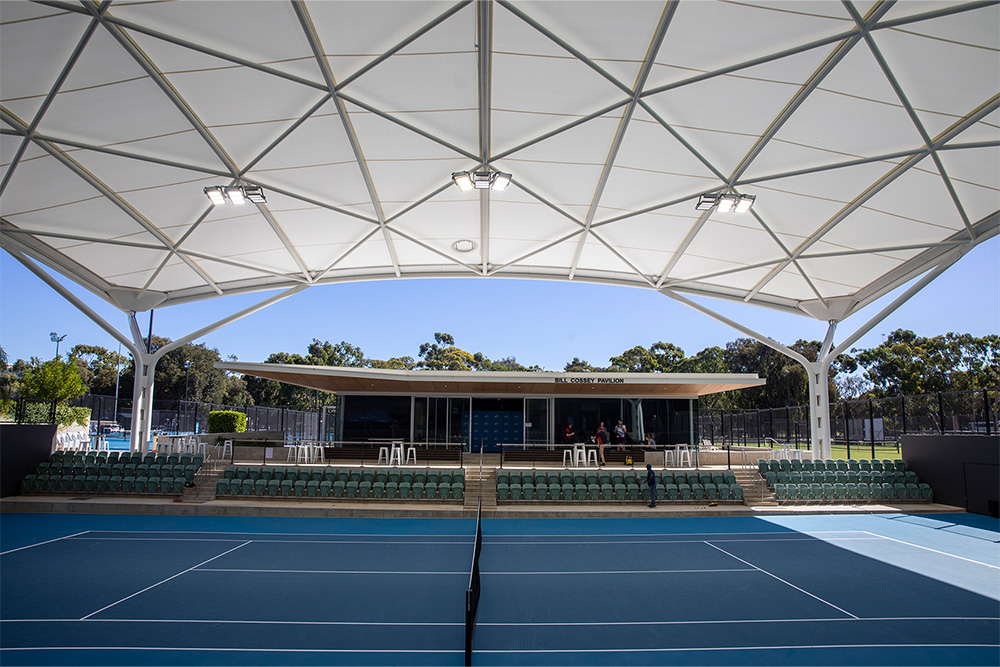
Tensile Membrane Barrel Vault Structures
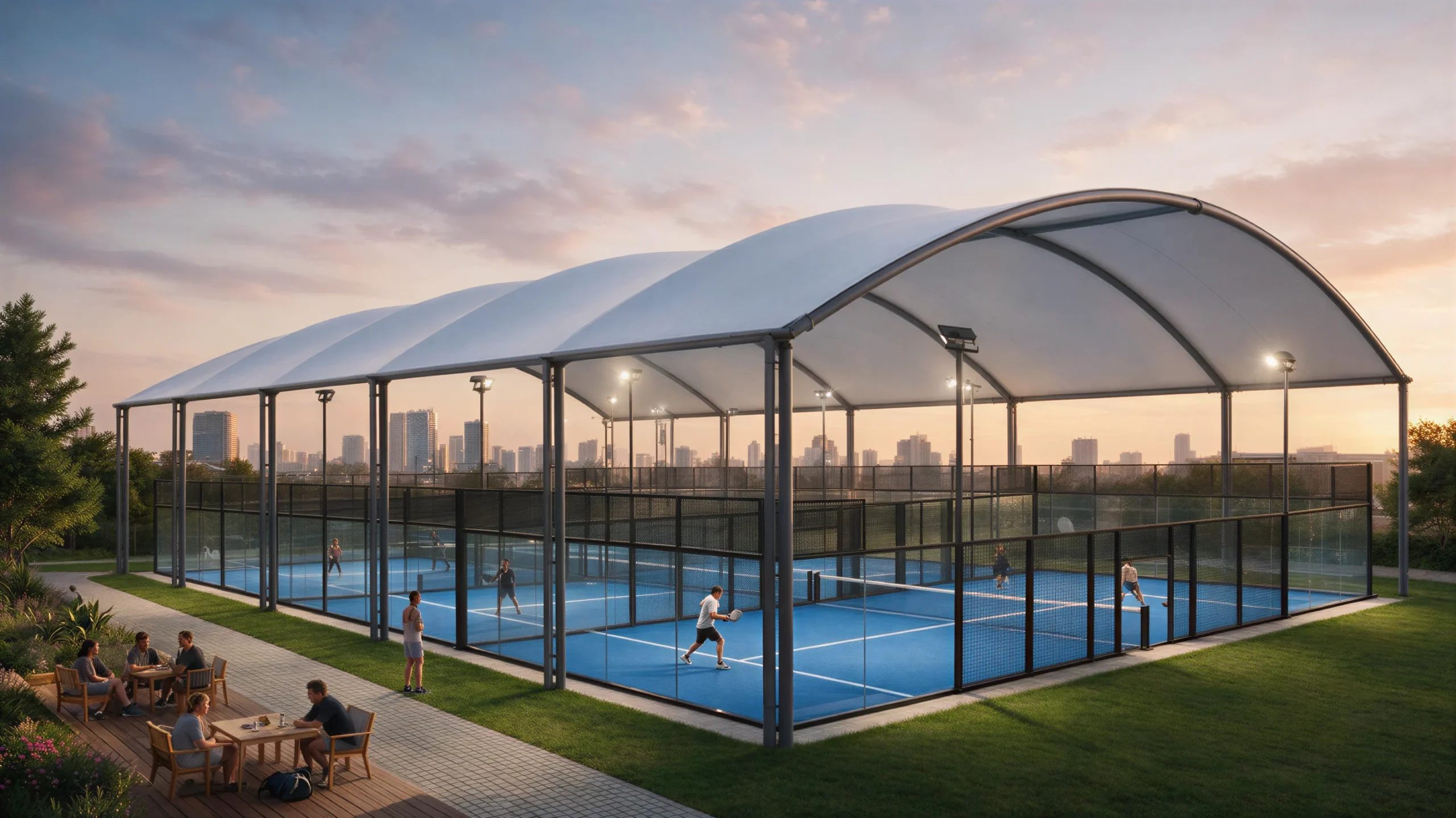
A barrel-vault canopy is a fully engineered structure designed specifically for sporting applications.
These structures are commonly used to cover tennis courts, basketball courts and multi-sport facilities throughout Australia. The same design principles can be applied successfully to padel courts, whether covering a single court or a large multi-court venue.
The major advantage of a barrel-vault design is flexibility.
Each structure can be customised to suit:
- Site dimensions
- Number of courts
- Court orientation
- Wind region
- Local council requirements
- Future expansion plans
For facilities covering multiple courts, a barrel-vault structure typically provides a more durable and premium solution than imported modular systems.
How High Should a Covered Padel Court Be?
Clearance height is one of the most important factors when designing a padel court roof.
As a general guide:
- Minimum edge beam height: 6 metres, although through discussions with some Australia’s Padel Court installers, an edge-beam height of 8 metres is preferred, especially for competition-standard facilities.
- Minimum clearance above the court centre: 9 metres
Actual structure dimensions will vary depending on:
- Court configuration
- Number of courts
- Structural span
- Local authority requirements
- Competition level requirements
Facilities aiming to host professional or sanctioned tournaments should consult the relevant governing bodies, such as Padel Australia or Tennis Australia, to confirm current facility requirements.
Key Design Considerations for Padel Court Canopies
Every sports roof structure should be engineered specifically for its location and intended use.
Important considerations include:
Structural Engineering
Australian sports roofing structures must be designed by qualified structural engineers and comply with applicable Australian Standards and the National Construction Code.
Engineering design must consider:
- Wind loads
- Ground conditions
- Drainage requirements
- Structural movement
- Safety factors
- Long-term durability
Sports Lighting
Many clubs choose to integrate sports lighting directly into the roof structure.
Planning lighting, power and maintenance access early in the design process can result in a more efficient and cost-effective outcome.
Accessibility
For multi-court developments, consideration should be given to:
- Court spacing
- Spectator circulation
- Sports wheelchair access
- Future enclosure requirements
Good accessibility planning improves both functionality and compliance outcomes.
Drainage and Water Management
A successful sports roofing project must effectively manage rainwater collection and drainage.
Early planning for gutters, downpipes and stormwater systems helps ensure compliance and protects adjacent infrastructure.
Advantages of Tensile Membrane Roofing For Padel Courts
Tensile Membrane Roofing 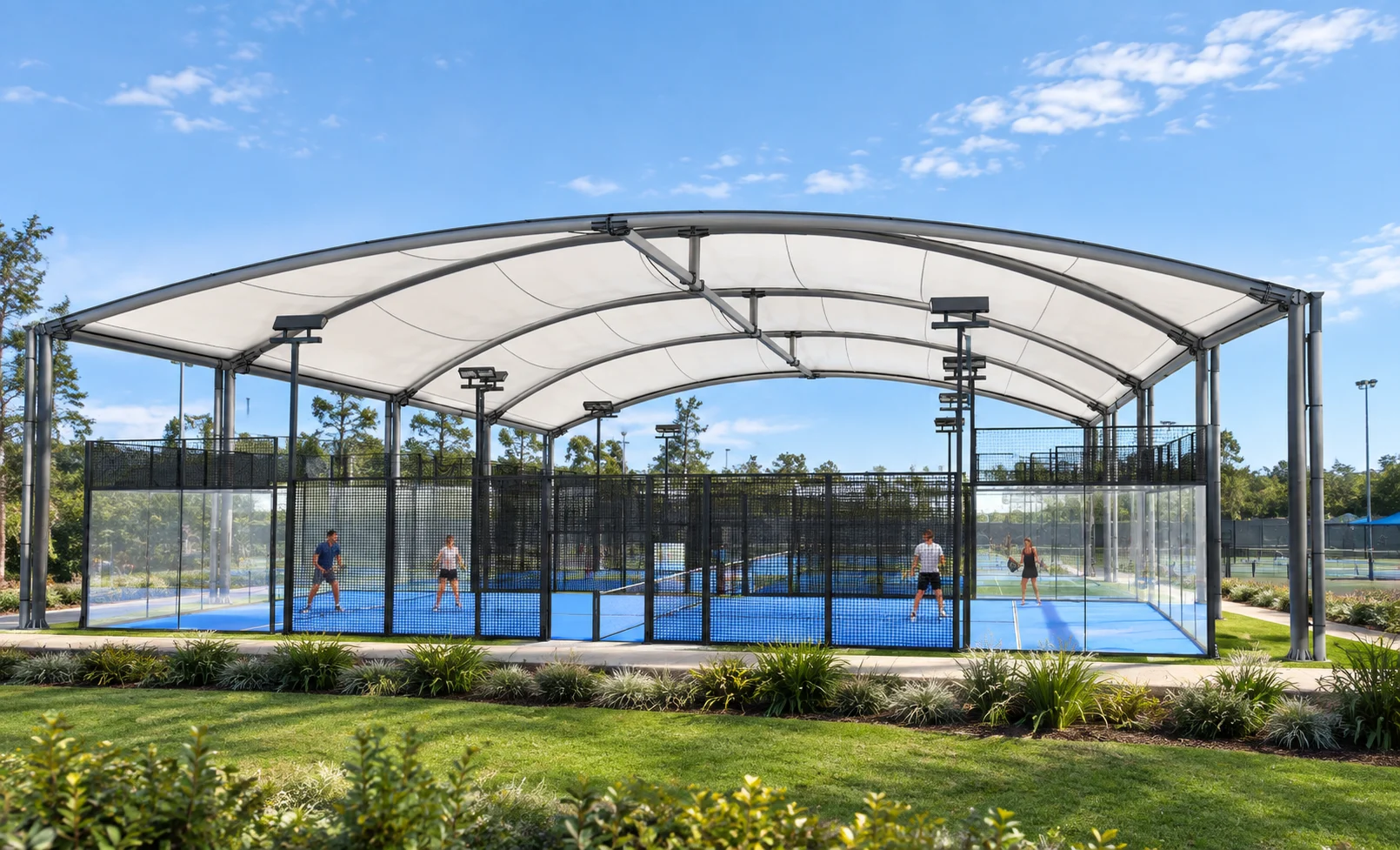
Tensile membrane structures use a tensioned architectural fabric to create a lightweight weatherproof roof.
Benefits include:
- Natural daylight transmission
- Reduced structural weight
- Attractive architectural appearance
- Lower operational lighting requirements
- Excellent durability
Common membrane materials include:
- PVC-coated polyester fabric
- PTFE-coated fibreglass fabric
How Long Does a Padel Court Canopy Last?
When designed in accordance with Australian standards, the primary steel structure and foundations of a sports roof can achieve a design life of approximately 50 years.
Typical membrane lifespans include:
PVC Membrane
- Service life up to 25 years
- Mid-life membrane replacement typically expected
PTFE Membrane
- Service life exceeding 40 years
- Often capable of lasting the structural life of the facility
Many quality systems are supported by:
- 10+ year structural warranties
- 10 to 20 year membrane warranties
- Protective coating warranties
As with any asset, regular maintenance plays an important role in ensuring long-term performance.
Fully Enclosed Facilities: Fabric Warehouse Facilities
For larger indoor padel venues, fully enclosed fabric structures are becoming increasingly popular. 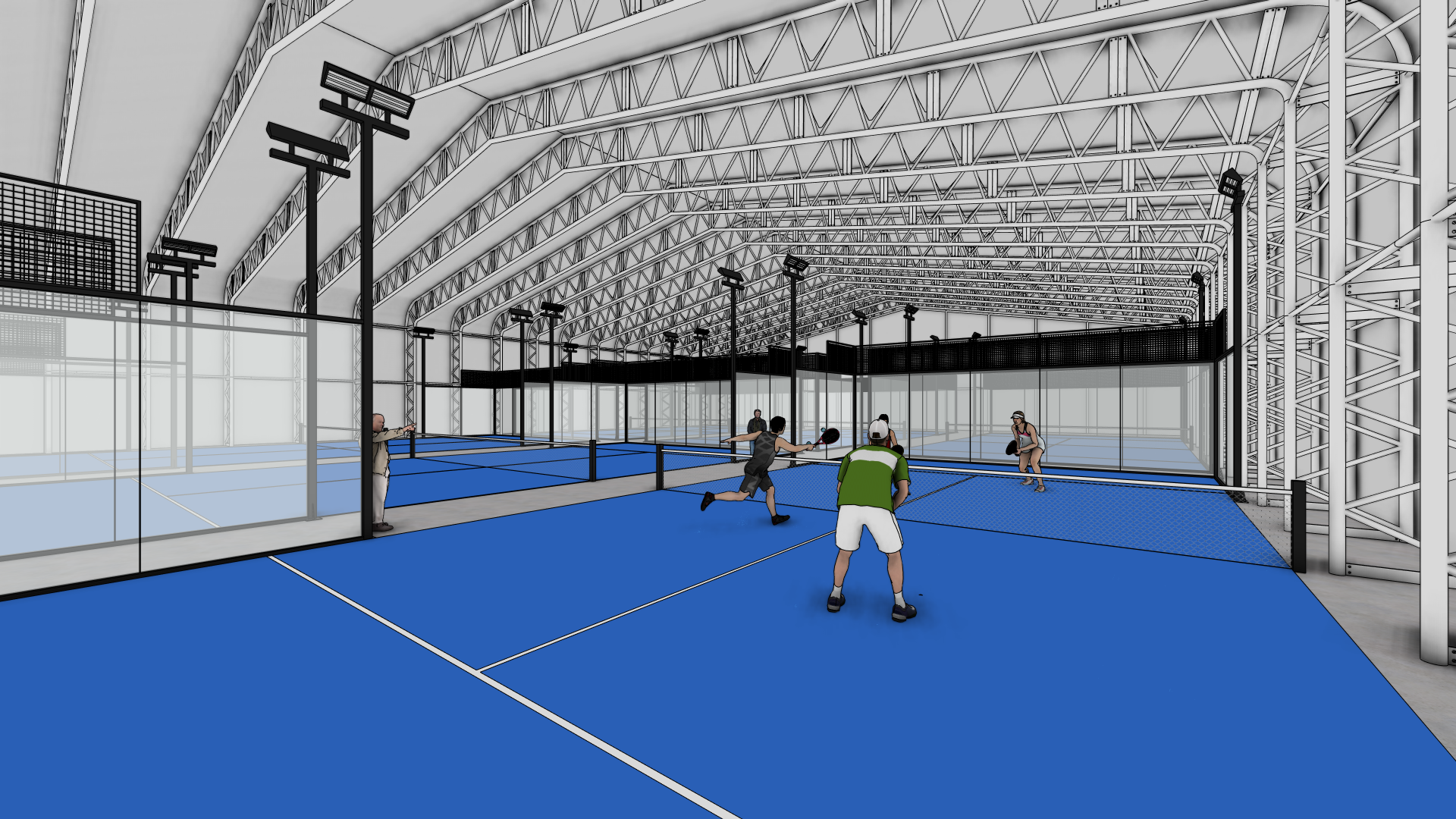
Often referred to as fabric warehouses or tensioned sports buildings, these structures provide:
- Year-round weather protection
- Rapid construction timeframes
- Large clear spans
- Lower construction costs compared with conventional buildings
- Flexible layouts for multiple courts
These structures can be customised with:
- Roller doors
- Personnel access doors
- Natural ventilation systems
- Mechanical ventilation
- Glazed entry areas
- Clubhouse integration
For operators developing large-scale padel clubs, a fully enclosed fabric structure can provide an efficient alternative to traditional steel and concrete construction.
Are You Planning a Covered Padel Court Project?
Whether you’re developing a single court, a community facility or a large commercial venue, the success of the project starts with selecting the right roofing solution.
MakMax has decades of experience delivering tensile membrane structures throughout Australia and recently contributed to SAPIA’s Code of Practice for Padel Courts, helping establish industry guidance for covered sports facilities.
To explore potential solutions for your project:
For more information and to request a copy of the SAPIA Code of Practice for Padel Courts – V4.0